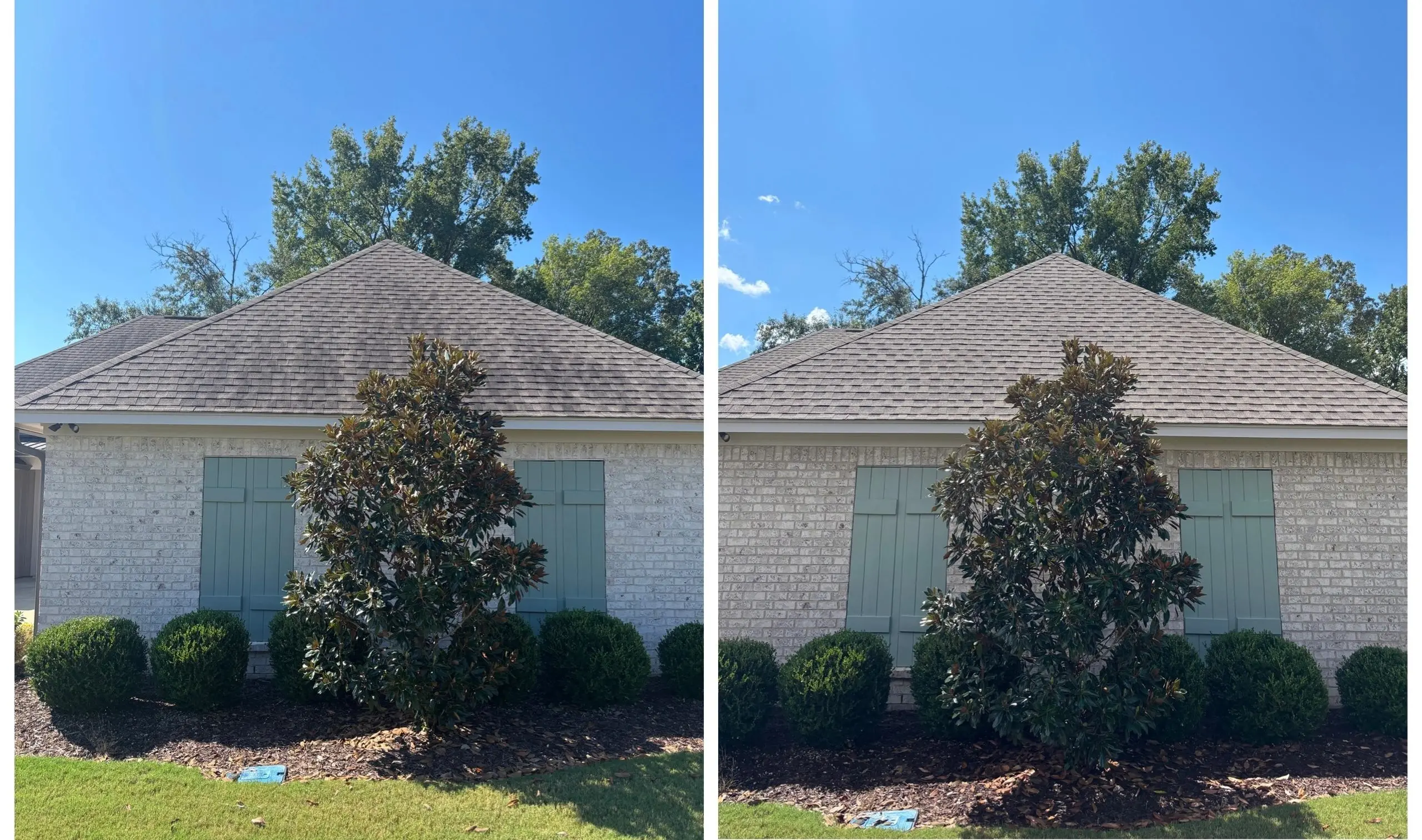
If your homeowners insurance company sends a notice about your roof’s condition, clarify exactly what it requires before scheduling cleaning. The concern might involve discoloration, debris, damaged roofing, or a request for an inspection. These issues do not all call for the same solution.
For homeowners in Pearl and the Jackson Metro, the first step is a conversation with the insurer or agent—not assuming that roof cleaning will resolve the notice.
Read the Notice and Confirm the Deadline
Keep a copy of the notice and identify the condition it describes, any requested action, and the deadline for responding.
Contact your insurer or agent if the wording is unclear. Ask whether it wants cleaning, repairs, an inspection, or additional documentation. Request written clarification so you can share the requirements with the appropriate service provider.
If timing is a concern, discuss it with the insurer promptly rather than assuming an extension will be available.
Ask Whether Cleaning Addresses the Concern
If the notice refers to staining or discoloration, ask whether cleaning is an acceptable response and what evidence the insurer will need afterward.
If the concern involves roof age, damaged shingles, leaks, or other roofing defects, a cleaning service may not address it. Those issues need assessment by a qualified roofer.
Only your insurer can confirm whether the work and documentation satisfy its request.
Arrange the Appropriate Assessment
Tell your cleaning provider or roofer what the notice says. Share the relevant requirements and photos, along with information about previous repairs or known problems.
A roof cleaning estimate is different from a roofing inspection. Cleaning can address suitable surface discoloration, but it does not repair leaks, restore worn shingles, or certify the roof’s remaining lifespan.
Clarifying the scope before work begins helps you avoid paying for a service that does not address the stated concern.
Choose a Suitable Roof Cleaning Method
If cleaning is appropriate, the method should follow the roofing manufacturer’s guidance.
Asphalt shingles should not be treated like a concrete driveway. The Asphalt Roofing Manufacturers Association advises against pressure washing or scrubbing algae from asphalt shingles.
Discuss the roofing material, existing condition, access, and nearby landscaping with your provider before scheduling treatment.
Keep Records and Follow Up
Ask the insurer which documents it requires. Depending on its request, these might include photographs, an invoice, or a report from a qualified roofing professional.
Keep copies of the work records and your communications. Submit the requested information through the insurer’s specified process and ask for confirmation that it was received and whether further action is needed.
Completing cleaning does not, by itself, confirm that the insurance issue has been resolved.
Where to Get Help With Insurance Questions
Your insurer or agent is the first contact for questions about its notice and your policy.
If you cannot resolve a concern, your state insurance department may be able to explain available options or assist with a complaint. A cleaning company cannot interpret coverage, determine your policy rights, or guarantee renewal.
Roof Cleaning in Pearl and the Jackson Metro
Premier provides roof cleaning in Pearl and throughout the Jackson Metro.
If your insurer has confirmed that cleaning is the requested action, share the relevant requirements when asking for an estimate. We can discuss the cleaning scope and available scheduling before you book.
Quick Answers
Will roof cleaning resolve an insurance notice?
Only if the notice is about staining or discoloration and your insurer confirms cleaning is acceptable. Only the insurer can say whether the work satisfies its request.
Should asphalt shingles be pressure washed?
No. The Asphalt Roofing Manufacturers Association advises against pressure washing or scrubbing algae from asphalt shingles.
What documents might my insurer want?
Depending on its request: photographs, an invoice, or a report from a qualified roofing professional. Ask the insurer which it needs.